
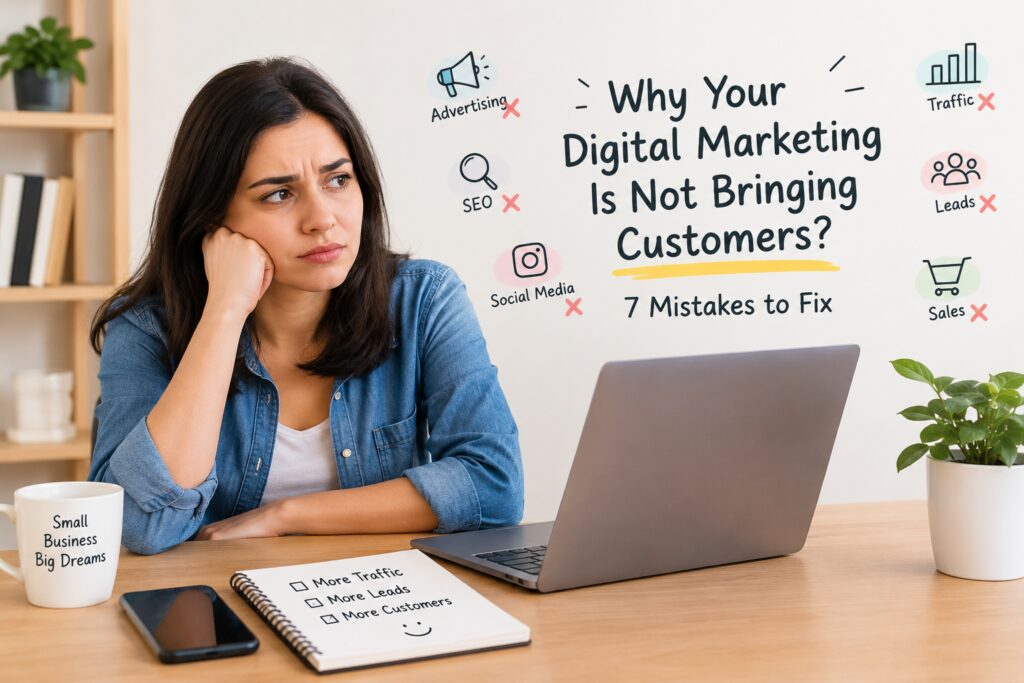
Why Your Digital Marketing Is Not Bringing Customer: 7 Mistakes Small Businesses Must Fix
Digital marketing not working for customers is a common problem for many small businesses. You may have a website, post on social media regularly, and spend money on ads, but still struggle to get enquiries. This can be disappointing when you are putting time and money into your business. Sometimes, a few simple mistakes in your marketing can stop people from finding your business or choosing your services. Understanding these problems is the first step towards improving your results.
This can be frustrating, especially when you are putting money and effort into your marketing but cannot see clear results.
The problem is not always your budget. Sometimes, a few small mistakes in your digital marketing strategy can make it harder for people to find your business, understand your services, or decide to contact you.
The good news is that many of these problems can be identified and improved without making major changes to your business.
In this blog, we will look at seven common digital marketing mistakes small businesses should check and how you can fix them.
1. Why Digital Marketing Is Not Bringing Customers
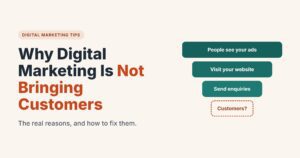
One common mistake is trying to reach everyone instead of focusing on the people who are most likely to need your products or services.
For example, if you run a local digital marketing agency, your ideal customers might be shop owners, service providers, restaurants, or small companies looking to improve their online presence. Reaching people who have no need for these services is unlikely to bring useful enquiries.
When your message is too broad, people may see your posts or advertisements without feeling that they are relevant to them.
How to fix it
Start by understanding your ideal customer. Think about their location, needs, budget, and the problems they want to solve.
Create content that answers their questions and explains how your business can help. If you serve a particular city or area, mention it naturally on relevant website pages and in your local business information.
The more clearly you understand your audience, the easier it becomes to create useful marketing messages.
2. Website Problems That Stop Digital Marketing From Working: Customers
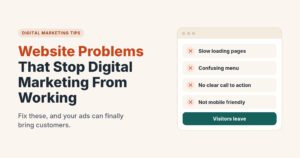
Your website may look attractive, but design alone does not turn visitors into customers. If digital marketing not bringing customers is a concern, make sure your website clearly explains your services and make it easy for visitors to contact you.
Imagine someone visits your website to learn about your services. If they cannot understand what you offer, find your prices or service details, or figure out how to contact you, they may leave and look somewhere else.
A confusing website can make even a good business difficult to choose.
How to fix it
: Make sure your website clearly explains:
• What your business offers.
• Who your services are suitable for.
• How your products or services help customers.
• How visitors can contact you or request a Quotation.
Use clear buttons such as “Contact Us,” “Request a Quote,” or “Book a Consultation,” depending on your business.
Also, check that your website pages load properly on a mobile phone; text and details should be simple to find.
A website should help visitors make their next decision, not leave them guessing.
3. How SEO Helps Small Business Attract More Customers

Many people search on Google before choosing a product, service, or local business; if your website does not appear for relevant searches, potential customers may not discover it.
Search engine optimization, commonly called SEO, helps search engines understand your website and helps people find pages that match their needs.
For example, a person searching for “digital marketing services for small businesses” is looking for something specific. A website with useful information about those services may be more relevant than a page that only contains a company name and a few general statements.
SEO takes time, and good results are not guaranteed. However, improving your website’s content and technical quality can help build long- term visibility.
How to fix it
Start with basic steps:
• Find the search terms your potential customer actually use.
• Include relevant keywords naturally in page titles, headings, and website content.
• Write separate, useful pages for your main services.
• Publish articles that answer common customer questions.
• Improve page loading speed and mobile usability.
• Use Google Search Console to monitor search visibility and identify website issues.
Avoid repeating the same keywords unnaturally throughout every paragraph. Write for people first and make sure each page provides genuine value.
4. Social Media Marketing Mistakes That Reduce Customer Enquiries
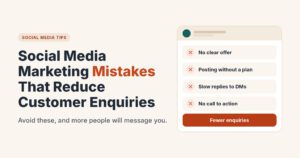
Posting on Instagram, Facebook, or LinkedIn can help people learn about your business. If digital marketing not bringing customers is a concern, review whether your social media posts reach the people who are most likely to need your services.
If every post is a sales promotion, people may lose interest. On the other hand, if your posts are entertaining but never explain your services, your audience may not know how to work with you.
A useful social media presence should give people a reason to follow your business and enough information to consider becoming a customer.
How to fix it
• Tips related to its industry.
• Answer t frequently asked questions.
• Example of completed work, with permission where needed.
• Customer feedback that is genuine and used with consent.
• Explanation of services and how they work.
• Short demonstration or behind-the-scenes videos.
Includes a suitable next step when it makes sense, such as visiting your website, sending an enquiry, or a related blog.
You do not need to post several times every day. A manageable schedule with useful and consistent content is often more practical than posting frequently without a clear purpose.
5. Digital Marketing Mistakes That Stop You From Getting Customers
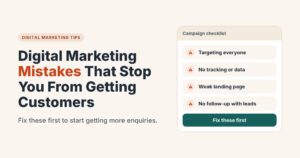
Online advertising can help a business reach potential customers, but spending money does not automatically produce sales. If digital marketing not bringing customers is a concern for your business, check whether your advertisements are reaching the right audience and generating genuine enquiries.
An advertisement may receive many clicks while generating very few enquiries. This can happen because the audience is not suitable, the message is unclear, the landing page is confusing, or the offer does not match what people need.
Without tracking results, it is difficult to understand where the money is going.
How to fix it
Before launching a campaign, decide what result you want. It could be phone calls, form submissions, website purchases, bookings, or qualified enquiries.
Then monitor useful measurements such as:
• Number of enquiries received.
• Cost per enquiry.
• Number of enquiries that become customers.
• Revenue generated by the campaign, where it can be measured reliably.
Check whether the advertisement and the landing page communicate the same offer. If your advertisement promotes a particular service, take visitors to a page about that service rather than a general homepage.
Start with a budget your business can afford, test different messages carefully, and review the results before increasing your spending.
6. Following Up With Leads to Win More Customers

Not every person who contacts your business will make a purchase immediately. Some may need more information, time to compare options or an answer to a specific question.
If enquiries are left unanswered or follow-ups are forgotten, you may lose opportunities that your marketing has already generated.
For a small business, this problem can be particularly important because every genuine enquiry may represent a valuable opportunity.
How to fix it
Create a simple process for managing enquiries.
• Reply to messages and calls as promptly as you reasonably can.
• Keep a record of enquiries and their current status.
• Answer questions clearly instead of sending the same sales message to everyone.
• Follow up politely when appropriate.
• Respect people’s preferences if they do not want further messages.
You can use a spreadsheet, a customer relationship management tool, or a simple enquiry register to stay organised.
Marketing does not end when someone clicks an advertisement or fills out a form. The way you respond can also influence whether that person chooses your business.
7. Measuring Digital Marketing Results to Get More Customers

Website visits, social media links, and follower counts can tell you something about audience activity. Tracking the right results can help you understand why digital marketing customers is a problem and which areas need improvement.
For example, a post might receive hundreds of likes but generate no relevant enquiries. Another post might receive fewer likes but bring two customers who need your services.
This is why it is important to look beyond the numbers that are easiest to see.
How to fix it
Choose a few measurements that match your business goals.
If your goal is to attract enquiries, track the number of relevant enquiries and how many become customers. If you run an online store, monitor purchases and sales revenue. If you serve local customers, pay attention to relevant calls, direction requests, bookings and website visits where those measurement and available.
Tools such as Google Analytics and Google Search Console can help you understand website activity and search performance when configured correctly.
Review your results regularly. Look for patterns, identify what seems to work, and make one or two practical improvements at a time.
Remember that results can be affected by seasonality, pricing, competition, customer demand, and other factors. use the data to guide decisions rather than expecting every change to produce an immediate improvement.
How Sheevanta Can Help Improve Your Digital Marketing Workflow.
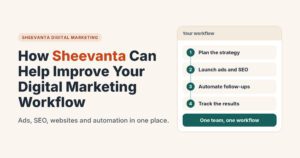
Managing a business is already a full-time responsibility. Finding time to improve your website, create content, manage social media, and review marketing results can be difficult.
A clear digital marketing plan can help bring these activities together. Instead of working on each channel separately, you can focus on the customers you want to reach and the services you want visitors to take.
Sheevanta offers digital marketing- related services that businesses can explore according to their needs. If you are looking for support with your online presence, visit the Sheevanta website or explore its services page to learn more about the available options.
Before choosing any service, consider your business goals, current challenges, budgets, and the result you want to measure.
Final Thoughts
If your digital marketing is not bringing customers, it may be time to review how your current strategy is working.
You do not need to change everything at once. Start by checking whether you are reaching the right audience, whether your website makes it easy to enquire, and whether your marketing activities are producing meaningful results.
Then look at your SEO, social media content, advertisement performance, and follow-up process.
Small, well-planned improvements can help you understand your customers better and make better use of your marketing budget. Give changes enough time to be evaluated, keep track of what happens, and adjust your approach as you learn.
The aim is not simply to get more views or clicks. It is to help the right people discover your business, understand what you offer, and feel confident enough to take the next step.
Frequently Asked Questions
1. Why is my digital marketing not working for customers?
Possible reasons include targeting the wrong audience, unclear website content, weak search visibility, inconsistent social media activity, poorly tracked advertisements, and slow follow-up with enquiries. Review your results to identify which issues are most relevant to your business.
2. How can a small business improve its digital marketing working speed?
Start by understanding your target customers, improving your website, creating useful content, working on SEO, and tracking enquiries. Focus on a few activities that match your business goals instead of trying every marketing channel at once.
3. Does SEO help small businesses get more customers?
SEO can help people discover your business through relevant search results. The outcome depends on factors such as competition, website quality, customer demand, and how well your content matches search intent. It is generally a long- term activity rather than an instant source of customers.
4. Should small businesses spend money on online advertisements?
Paid advertising may be useful when you have a clear audience, a relevant offer, a suitable landing page, and a way to measure results. Start within your budget and evaluate the quality and cost of the enquiries you receive before increasing spending.
5. How often should I review my digital marketing performance?
A monthly review is a practical starting point for many small businesses. If you are running an active advertising campaign, you may need to check performance more frequently. Choose a review schedule that gives you enough information to make sensible decisions.